© Freepik
April 23, 2026
Marianne Waldenfels
How healthy is sauerkraut for the gut? Scientific studies suggest it can support the gut microbiome – but not in the same way for everyone. Find out more
In short: Sauerkraut can support gut health, particularly when the gut microbiome is disrupted. Studies show that dietary fiber and fermentation products help strengthen the intestinal barrier. That said, the effect is generally smaller in healthy individuals.
Sauerkraut is considered a classic fermented food and is often described as a natural probiotic. However, the scientific evidence tells a more nuanced story: not everyone benefits equally, and the effect depends heavily on an individual's microbiome.
Sauerkraut is produced through the lactic acid fermentation of white cabbage. This process generates lactic acid bacteria such as Lactobacillus plantarum, L. brevis and Leuconostoc strains, which lower the pH and inhibit unwanted pathogens.
Unpasteurized sauerkraut contains large numbers of live microorganisms. Some of these bacteria survive stomach acid and reach the intestine, where they become temporarily active. There, they produce antimicrobial substances and can influence the immune response of the intestinal mucosa.
It is worth noting, however, that these bacteria typically do not colonize permanently — instead, they play a supportive role within the existing microbiome.
One key point that is often underestimated is the role of dietary fiber and so-called postbiotics. Sauerkraut provides around three grams of dietary fiber per 100 grams, which feeds beneficial gut bacteria and promotes their activity.
During fermentation, additional bioactive compounds are produced, including short-chain fatty acids such as butyrate and acetate. These compounds strengthen the intestinal barrier, exert anti-inflammatory effects, and support the regeneration of the intestinal mucosa.
These effects are preserved even in pasteurized sauerkraut, since the metabolic byproducts are heat-stable. As a result, even cooked sauerkraut can have a positive effect on gut health.
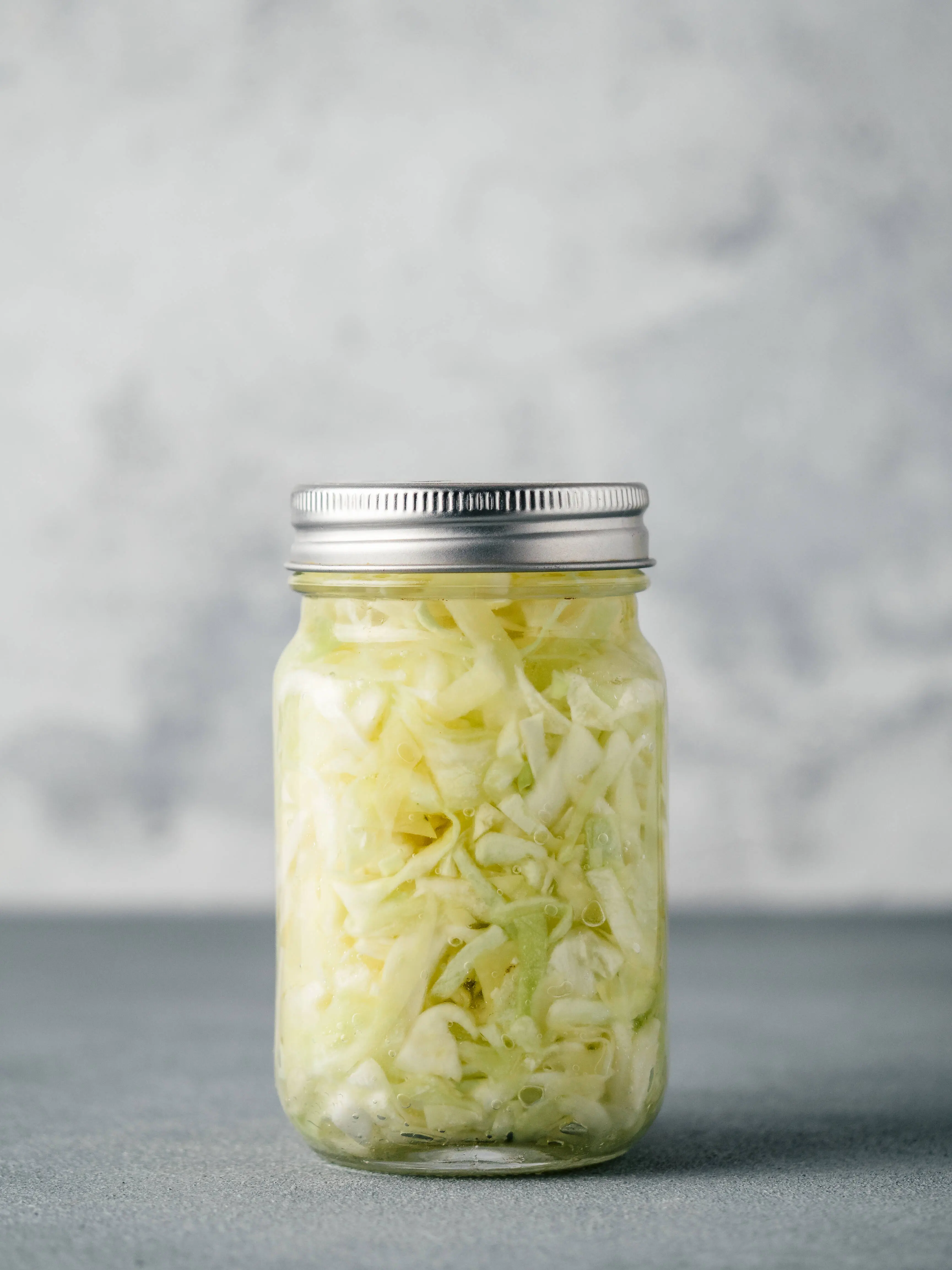
Scientific studies show that sauerkraut can have particularly positive effects in people with a disrupted gut microbiome. Intervention studies have observed an increase in bacterial diversity and greater production of short-chain fatty acids, while inflammatory markers decreased at the same time.
Randomized studies suggest that both raw and pasteurized sauerkraut can improve the intestinal barrier and positively influence metabolic processes.
In healthy individuals with a stable gut microbiome, however, significant changes in the microbiome are often not observed. This suggests that a healthy gut ecosystem is relatively stable and less susceptible to change from individual foods.
Nevertheless, studies in this group also report functional benefits such as improved digestion and a more stable mucosal barrier.
Overall, studies show that sauerkraut has clear benefits, especially when the gut microbiomeis disrupted, while the effect is smaller in healthy individuals
Sauerkraut can be especially helpful for:
In healthy individuals, sauerkraut plays more of a supportive and preventive role. It helps maintain microbiome stability, but rarely brings about dramatic changes.
Not everyone tolerates sauerkraut equally well. People with histamine intolerance are often sensitive to fermented foods. Sauerkraut can also aggravate symptoms such as bloating in people with small intestinal bacterial overgrowth (SIBO).
Quantity also matters. While moderate portions are well tolerated, very high consumption can lead to digestive problems.
Quality is also worth considering. Industrially processed sauerkraut may contain residues, which is why organic products or homemade sauerkraut are often the better choice.
Sauerkraut can support the gut microbiome, primarily through dietary fiber and fermentation byproducts. The bacteria it contains typically act only temporarily, but they help stimulate the activity of existing microorganisms in the gut. Studies show that the effects are especially pronounced when the gut microbiome is disrupted, while the benefits are more modest in healthy individuals.
Most studies and dietary recommendations suggest that 100 to 150 grams of sauerkraut per day is a reasonable amount. For beginners, around 50 grams is often enough to let the digestive system adjust gradually. Eating it regularly two to three times per week may already be sufficient to achieve positive effects on gut health.
Raw sauerkraut contains live lactic acid bacteria and can therefore have probiotic effects. Cooked or pasteurized sauerkraut contains fewer live cultures, but still provides valuable postbiotics and dietary fiber. Both varieties can be beneficial for gut health, depending on individual tolerance and goals.
Sauerkraut can cause bloating in sensitive individuals, particularly when first introducing it into their diet. The primary culprits are its dietary fiber and fermentation byproducts, which are further broken down in the gut. In most cases, any discomfort can be significantly reduced by starting with smaller amounts and allowing the body to adjust gradually.
Sauerkraut can begin to influence digestion within just a few days. However, meaningful changes to the gut microbiome typically take longer and depend heavily on each individual's starting condition.
Sauerkraut can generally be eaten every day, as long as it agrees with you. For most people, portions of 100 to 150 grams are considered perfectly fine.
For those with histamine intolerance, SIBO, or a sensitive gut, sauerkraut may cause discomfort. In these cases, intake should be adjusted individually or avoided altogether.
Sauerkraut can also be eaten in the evening. That said, it may cause bloating in people with sensitive stomachs, which is why smaller portions are often better tolerated.
Yes, sauerkraut can support digestion, as it contains dietary fiber and fermentation byproducts that stimulate intestinal activity.
Sauerkraut's dietary fiber can help stimulate intestinal movement and relieve constipation, though the effect varies from person to person.
After a course of antibiotics, sauerkraut can help support the gut microbiome. Fermented foods in particular can aid in recovery.
Very large amounts — such as over 400 to 500 grams per day — can cause bloating or digestive issues. A moderate amount is generally better tolerated.
Sauerkraut is not a miracle cure, but it is a food with strong scientific backing for promoting gut health. Its benefits stem not only from probiotic bacteria, but above all from dietary fiber and bioactive fermentation products.
Sauerkraut can bring measurable benefits especially when the gut microbiome is disrupted, while in healthy individuals it acts primarily in a stabilizing and preventive capacity.